- The Nevada Gaming Management Board considers sports activities occasion contracts as sports activities betting
- The gaming regulator is warning its licensees about sports activities occasion contracts
Following a key federal ruling, the Nevada Gaming Management Board (NGCB) is once more reminding its licensees about its opinion that on-line exchanges facilitating sports activities occasion contracts are engaged in unlicensed sports activities betting.
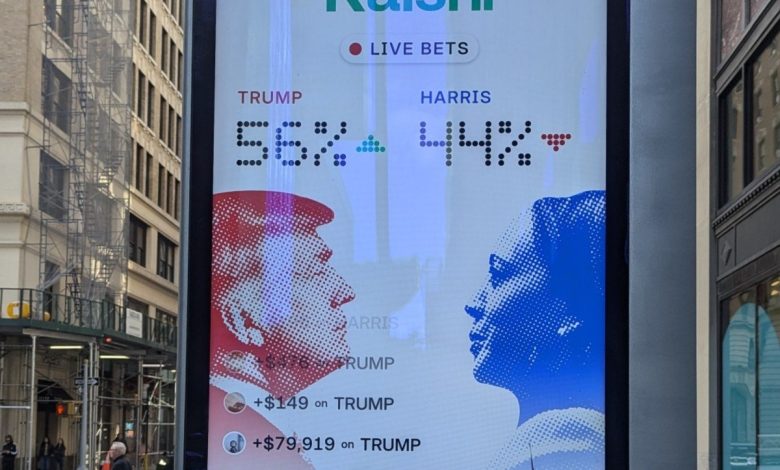
A digital billboard in New York Metropolis reveals Kalshi’s odds for the 2024 presidential election on Oct. 16, 2024. Gaming regulators in Nevada are warning licensees that they can not function sports activities occasion contracts with no sports activities betting license. (Picture: Shutterstock)
Final week, US District Decide Andrew Gordon sided with the NGCB in ruling that corporations like Kalshi, Robinhood, and Crypto.com providing shares on outcomes involving sporting occasions are operating illegal playing. The businesses declare their contracts, together with these involving sports activities, are monetary devices below federal legislation and due to this fact regulated by the Commodity Futures Buying and selling Fee.
Gordon and the NGCB disagree. Following the landmark ruling, the NGCB, thought of the gold commonplace of gaming regulation, issued one other notice to its casinos, sportsbooks, and gaming licensees that they can not have any relationship with such exchanges that proceed to supply sports activities occasion contracts in Nevada with no state-issued license.
Licensees on Discover
The NGCB explains that whereas Robinhood and Crypto.com agreed to stop operating sports activities occasion contracts in Nevada, Kalshi has not. Kalshi is interesting Gordon’s choice, one thing the NGCB says it’s going to “vigorously oppose.”
The NGCB considers a sports activities occasion contract to represent a wagering exercise, no matter whether or not the wagering happens on an alternate regulated by the CFTC.
“Examples of occasion contracts that the Board particularly considers to be wagering topic to its jurisdiction embrace occasion contracts primarily based on the result or partial end result of any sporting or athletic occasion, or different chosen occasions such because the World Sequence of Poker, the Oscars, Esports, and political elections (Sports activities and Different Occasion Contracts),” the NGCB discover defined. “Choices for Sports activities and Different Occasions Contracts could also be carried out in Nevada provided that the providing entity possesses a nonrestricted gaming license with sports activities pool approval in Nevada and meets the opposite necessities for sports activities wagering, together with, with out limitation, wagering accounts and sports activities e-book methods.”
The NGCB warns that Nevada licensees with out sports activities pool privileges that select to supply sports activities occasion contracts or companions with an organization doing so with out an applicable license, the Board “will take into account these developments because it evaluates the suitability of the entity to keep up a Nevada gaming license.” The warning added that “participating in illegal sports activities wagering in one other state or getting into right into a enterprise relationship with one other entity providing illegal sports activities wagering in one other state could name into query the nice character and integrity of the licensee.”
Will States Comply with?
Gordon’s ruling might be the beginning of the tip for CFTC-regulated exchanges providing sports activities occasion contracts. With the federal courtroom siding with the state gaming regulator’s opinion that sports activities occasion contracts are playing, and never a standard by-product funding, different state gaming regulators might take motion in opposition to Kalshi and the like.
The NGCB isn’t alone in opining that sports activities occasion contracts represent sports activities betting. Regulators in lots of different states have reached comparable conclusions, together with in Arizona, Michigan, Ohio, and Pennsylvania.